Business
How to Buy a House in Orlando With a Low Down Payment: 2026 Guide
September 7, 2026
Nelson
10 min read
How to Buy a House in Orlando With a Low Down Payment: 2026 Guide
Do you want to buy a home in Orlando but don’t have a large down payment saved?
You may have more options than you think.
One of the biggest misconceptions about buying a home is that you must put 20%
down. While a larger down payment can provide certain advantages, many qualified
home buyers can purchase a property with substantially less.
Depending on your financial situation, mortgage program, property, and eligibility for
assistance, you may be able to buy a home in Orlando with a relatively low down payment.
This guide explains some of the financing and assistance options Orlando home buyers
should investigate in 2026.
Do You Really Need 20% Down to Buy a House?
No.
A 20% down payment is not a universal requirement for purchasing a home.
Different mortgage programs have different down-payment requirements.
Depending on your qualifications, options may include:
- Conventional financing with a low down payment
- FHA financing
- VA financing for eligible borrowers
- USDA financing for eligible borrowers and properties
- Florida home buyer assistance programs
- Local down-payment assistance programs
The best program depends on your credit, income, debt, available savings, property, and
other qualification requirements.
How Much Is a 20% Down Payment?
To understand why low-down-payment financing matters, consider a $350,000 home.
A 20% down payment would be:
$350,000 × 20% = $70,000
That is a substantial amount of money.
If an eligible borrower qualified for a 5% down-payment structure, the down payment
would instead be:
$350,000 × 5% = $17,500
At 3.5%:
$350,000 × 3.5% = $12,250
At 3%:
$350,000 × 3% = $10,500
The difference can make homeownership considerably more accessible.
Remember, however, that the down payment is not necessarily the only money needed to
purchase a home.
Option #1: Low-Down-Payment Conventional Mortgage
Some conventional mortgage programs may allow qualified borrowers to purchase with
relatively small down payments.
Certain eligible borrowers may have conventional options requiring as little as
approximately 3% down.
However, eligibility depends on the specific mortgage program and borrower.
If your down payment is below a certain level, private mortgage insurance may also apply.
Ask your mortgage professional to compare:
- Down payment
- Interest rate
- Private mortgage insurance
- Closing costs
- Monthly payment
- Long-term financing cost
A conventional mortgage can be an attractive option for some Orlando home buyers,
particularly those with stronger credit profiles.
Option #2: FHA Financing
FHA-insured mortgages are widely used by first-time and other home buyers.
For eligible borrowers meeting applicable credit and underwriting requirements, FHA
financing may allow a down payment as low as 3.5%.
For example:
$300,000 home = $10,500 at 3.5%
$350,000 home = $12,250 at 3.5%
$400,000 home = $14,000 at 3.5%
FHA mortgages also include mortgage insurance requirements.
Therefore, buyers should compare the total monthly and long-term cost rather than
choosing a loan solely because of its minimum down payment.
Option #3: VA Home Loan
Eligible veterans, active-duty service members, and certain surviving spouses may qualify
for VA-backed home financing.
One of the major potential benefits of VA financing is the ability for qualified borrowers to
purchase with no down payment, subject to program requirements.
However, zero down does not mean zero expense.
Depending on the transaction, a buyer may still need money for items such as:
- Closing costs
- Prepaid expenses
- Inspections
- Homeowners insurance
- Moving expenses
- Other applicable costs
Eligible military borrowers should investigate VA financing before assuming they need a
large down payment.
Option #4: USDA Home Loan
USDA-backed mortgages may provide another potential zero-down-payment option for
qualified borrowers purchasing eligible properties.
USDA eligibility can depend on both:
- Household income
- Property location
Not every Orlando property will qualify.
However, buyers who are willing to consider eligible communities outside the urban core
may want to investigate USDA financing.
A participating lender can determine whether the borrower and property meet current
USDA requirements.
Option #5: Florida Down-Payment Assistance
Qualified Florida home buyers may have access to down-payment and closing-cost
assistance.
The Florida Housing Finance Corporation administers home buyer programs through
participating lenders.
Assistance may be available in conjunction with certain eligible first mortgages.
Program requirements can include:
- Credit standards
- Income limits
- Purchase-price limits
- Home buyer education
- First-time home buyer requirements
- Occupancy requirements
Program funding and guidelines can change.
Do not rely on an old advertisement or social-media post when determining whether
assistance is currently available.
Option #6: Florida Assist
Qualified borrowers using an eligible Florida Housing first mortgage may potentially have
access to Florida Assist.
Florida Assist can provide funds toward eligible down-payment and closing costs, subject
to current program limits and requirements.
An important point:
Florida Assist should not automatically be treated as free money.
The assistance is structured as a deferred second mortgage and has repayment
conditions.
Before accepting any down-payment assistance, understand whether the assistance is:
- A grant
- Forgivable
- Deferred
- Repayable
- Interest-bearing
- A second mortgage
Ask exactly when repayment becomes due.
Option #7: Florida Hometown Heroes
Certain eligible Florida workers, military members, and veterans may qualify for assistance
through the Florida Hometown Heroes Housing Program.
The program can provide eligible borrowers with assistance toward down payment and
closing costs, subject to current program rules and funding availability.
Eligibility can include requirements involving:
- Occupation
- Employment
- Income
- Credit
- First-time home buyer status
- Property
- Approved financing
Because Hometown Heroes rules and available funding can change, buyers should verify
current program information before depending on the assistance.
Option #8: Orange County Down-Payment Assistance
If you’re purchasing an eligible property in Orange County, you may also want to investigate
Orange County’s home buyer assistance programs.
Qualified first-time home buyers may have access to down-payment and closing-cost
assistance based on program requirements.
Eligibility can depend on factors such as:
- Household income
- Household size
- Property
- Purchase price
- First-time home buyer status
- Mortgage qualification
- Completion of required home buyer education
Local assistance can be especially valuable for buyers who have sufficient income to
support a mortgage but have difficulty accumulating the cash required for the initial
purchase.
Can Down-Payment Assistance Cover Everything?
Not necessarily.
Even if you qualify for assistance, you should still prepare financially for purchasing a
home.
Potential expenses can include:
- Earnest money deposit
- Inspection
- Appraisal
- Down payment
- Closing costs
- Prepaid expenses
- Homeowners insurance
- Moving costs
- Immediate repairs
- Emergency reserves
The amount you need depends on your particular transaction.
Can the Seller Pay Some of Your Closing Costs?
Potentially.
Depending on the mortgage program, contract terms, appraisal, and negotiation, a seller
may be permitted to contribute toward certain buyer closing expenses.
Seller concessions are negotiable.
They should not be assumed.
For example, a buyer might submit an offer requesting that the seller contribute a certain
amount toward eligible closing costs.
Whether the seller accepts depends on the transaction and negotiations.
There are also mortgage-program limitations regarding permitted seller contributions.
Your real estate and mortgage professionals can help structure an offer appropriately.
Down Payment vs. Closing Costs
These two terms are often confused.
Down Payment
The down payment represents the portion of the home’s purchase price that you are not
financing through the first mortgage.
Closing Costs
Closing costs are expenses associated with obtaining the mortgage and completing the
transaction.
You may therefore need funds for both.
For example, qualifying for a 3.5% down-payment mortgage does not necessarily mean
your total cash requirement will equal exactly 3.5% of the purchase price.
Example: Buying a $350,000 Orlando Home
Imagine you find an Orlando home for $350,000.
Here is how several hypothetical down-payment percentages compare:
20% down: $70,000
10% down: $35,000
5% down: $17,500
3.5% down: $12,250
3% down: $10,500
The difference is significant.
If you also qualify for down-payment or closing-cost assistance, your required cash may
potentially be reduced further.
However, the exact amount depends on the mortgage and assistance program.
You should obtain a personalized estimate before making an offer.
Is a Smaller Down Payment Always Better?
No.
A low down payment can make it possible to purchase sooner, but that does not
automatically mean it is the best financial strategy for every buyer.
A smaller down payment can potentially result in:
- A larger mortgage balance
- A higher monthly payment
- Mortgage insurance
- Higher total interest expense
- Less initial equity
On the other hand, putting every dollar you have into the down payment can leave you
without emergency reserves.
The appropriate strategy balances the cost of financing with your overall financial stability.
Should You Use All Your Savings for the Down Payment?
Generally, buyers should carefully consider the consequences before using every available
dollar to purchase a home.
After closing, unexpected expenses can happen.
You might need money for:
- Air-conditioning repairs
- Plumbing
- Appliances
- Electrical repairs
- Roof-related expenses
- Insurance deductibles
- Furniture
- Moving
- Other maintenance
Maintaining some financial reserves can help protect you after becoming a homeowner.
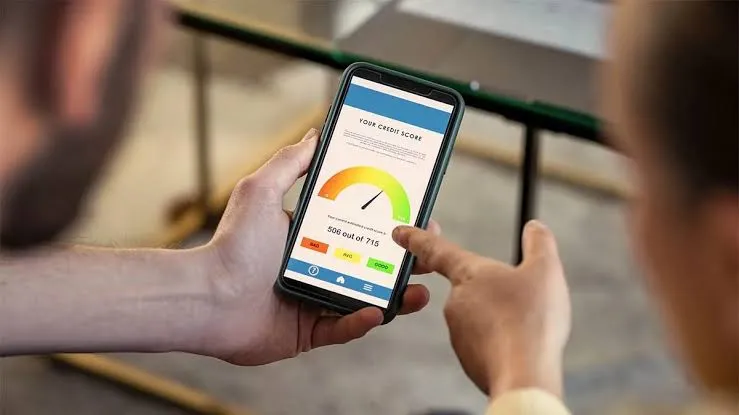
What Credit Score Do You Need for a Low Down Payment?
Credit requirements vary by mortgage program and lender.
For example, federal FHA guidelines permit the 3.5% minimum down-payment structure
beginning at a 580 qualifying credit score, although individual lenders may establish
additional requirements.
Conventional mortgage requirements differ.
Down-payment assistance programs can also impose their own credit standards.
This means you should evaluate your mortgage and assistance options together.
Can First-Time Buyers Get Better Options?
First-time home buyer status may provide access to certain mortgage or assistance
programs.
However, you do not necessarily need to be a first-time buyer to qualify for every low-downpayment mortgage.
Also, some programs define a first-time buyer as someone who has not owned and
occupied a primary residence during a specified period.
If you previously owned a home, ask whether you may still qualify under the program’s
definition.
What If You Only Have $10,000 Saved?
Do not automatically assume you cannot buy a house.
Whether $10,000 is enough depends on:
- Home price
- Mortgage program
- Closing costs
- Seller concessions
- Assistance eligibility
- Other transaction expenses
For some buyers, it may not be enough.
For others, available financing and assistance could potentially make purchasing possible.
The only reliable way to determine this is to review your specific financial situation.
What If You Have Good Income but Little Savings?
This is exactly the type of situation where low-down-payment financing and assistance
programs may be worth investigating.
Some prospective buyers can comfortably handle a monthly mortgage payment but
struggle to accumulate tens of thousands of dollars for a down payment.
Rather than assuming homeownership is years away, determine what programs are
currently available.
Low Down Payment Doesn’t Mean Buy Before You’re Ready
Just because financing may be available does not mean you should purchase immediately.
Before buying, consider whether you have:
- Stable qualifying income
- Manageable debt
- Sufficient funds for the transaction
- Emergency reserves
- A sustainable monthly housing budget
- Plans to remain in the property long enough for ownership to make sense
Buying a home should support your financial goals rather than strain them.
Step-by-Step: Buying With a Low Down Payment
If your goal is to buy a home in Orlando without putting 20% down, consider this process:
Step 1: Review your credit.
Step 2: Calculate your current savings.
Step 3: Speak with a mortgage professional.
Step 4: Compare conventional, FHA, VA or USDA options when applicable.
Step 5: Check eligibility for Florida and local assistance.
Step 6: Obtain mortgage pre-approval.
Step 7: Determine your total estimated cash requirement.
Step 8: Establish a comfortable monthly payment.
Step 9: Search for Orlando homes within that budget.
Step 10: Make an informed offer and proceed through inspection, financing and
closing.
Frequently Asked Questions
Can I buy a house in Orlando with 3% down?
Potentially.
Certain conventional mortgage programs may offer approximately 3% down options to
eligible borrowers. Program and lender requirements apply.
Can I buy a house with 3.5% down?
Potentially.
FHA financing may permit a 3.5% down payment for qualified borrowers meeting
applicable credit and underwriting requirements.
Can I buy a house with no money down?
Some eligible borrowers may qualify for zero-down-payment financing through programs
such as VA or USDA.
However, zero down does not necessarily mean zero cash is required for the entire
transaction.
Do I need 20% down in Florida?
No.
There is no universal requirement that every Florida home buyer make a 20% down
payment.
Can I get help with my down payment in Orlando?
Potentially.
Qualified buyers may have access to Florida Housing or local Orange County assistance
programs.
Eligibility and funding availability should be verified before relying on a program.
Is FHA better than conventional for first-time buyers?
Not necessarily.
The best mortgage depends on your credit, down payment, income, debt, property,
mortgage insurance, interest rate, and long-term goals.
Ask for a side-by-side comparison.
Ready to Buy a Home in Orlando With a Low Down Payment?
If a large down payment has been keeping you from considering homeownership, it may be
time to find out what options are actually available.
You may not need 20% down.
Depending on your qualifications, you may potentially have access to:
Low-down-payment conventional financing → FHA financing → VA or USDA financing
when eligible → Florida assistance programs → Orange County home buyer assistance.
The first step is determining which options fit your situation.
If you’re considering purchasing a home in Orlando or Central Florida, contact us to
discuss your home-buying goals and begin developing a plan for your purchase.
Ready to make your move?
Nelson Capital Financial Services guides you from pre-approval through closing — mortgage, real estate and insurance in one place.
Apply Online